When you walk into a hotel, restaurant, store, apartment complex, or other business, you expect the property to be reasonably safe.
You shouldn’t have to wonder whether a wet floor will cause you to fall, whether a broken fixture will give way, or whether a known hazard has been left unattended.
But when a dangerous condition on someone else’s property causes an injury, who may be responsible?
That’s where premises liability comes into play.
A Recent Hotel Verdict Highlights the Issue
A recent case involving a Georgia hotel has put property safety and responsibility in the spotlight.
According to Law360, a federal jury found the operator of a Super 8 hotel liable in a case involving a woman who alleged she was sexually trafficked at the hotel as a teenager. The jury awarded $44 million in compensatory damages and $120 million in punitive damages, a total of $164 million. The plaintiff’s attorneys described it as the largest sex-trafficking verdict in U.S. history.
The case involved allegations that hotel employees observed suspicious activity and failed to take appropriate action. The lawsuit also alleged that hotel staff knew about activity occurring at the property and, in some instances, assisted the traffickers.
The case involved federal trafficking claims, so it is not a typical Texas premises-liability case. But it raises an important question that applies more broadly:
What responsibility does a property owner or business have when dangerous conditions or activities are taking place on its property?
What Is Premises Liability?
Premises liability is a type of personal injury claim involving an injury caused by a condition on someone else’s property.
Depending on the circumstances, these cases can involve:
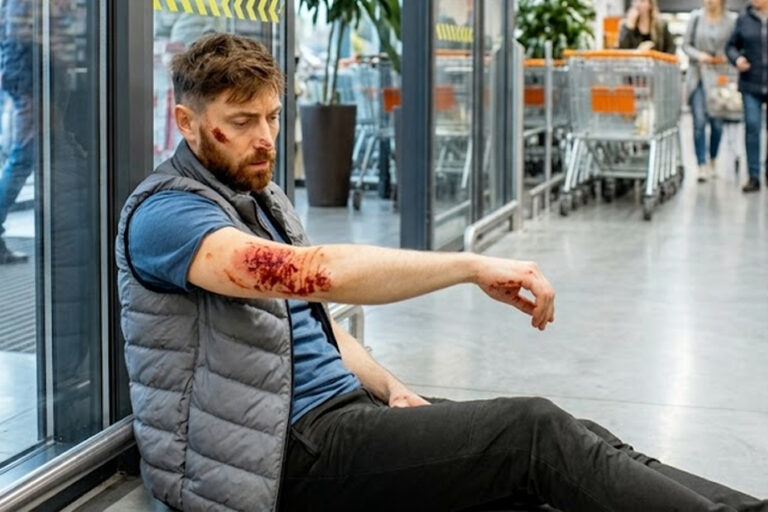
- Slip-and-fall accidents
- Wet or slippery floors
- Uneven surfaces
- Broken stairs or handrails
- Poor lighting
- Unsafe walkways
- Defective or poorly maintained fixtures
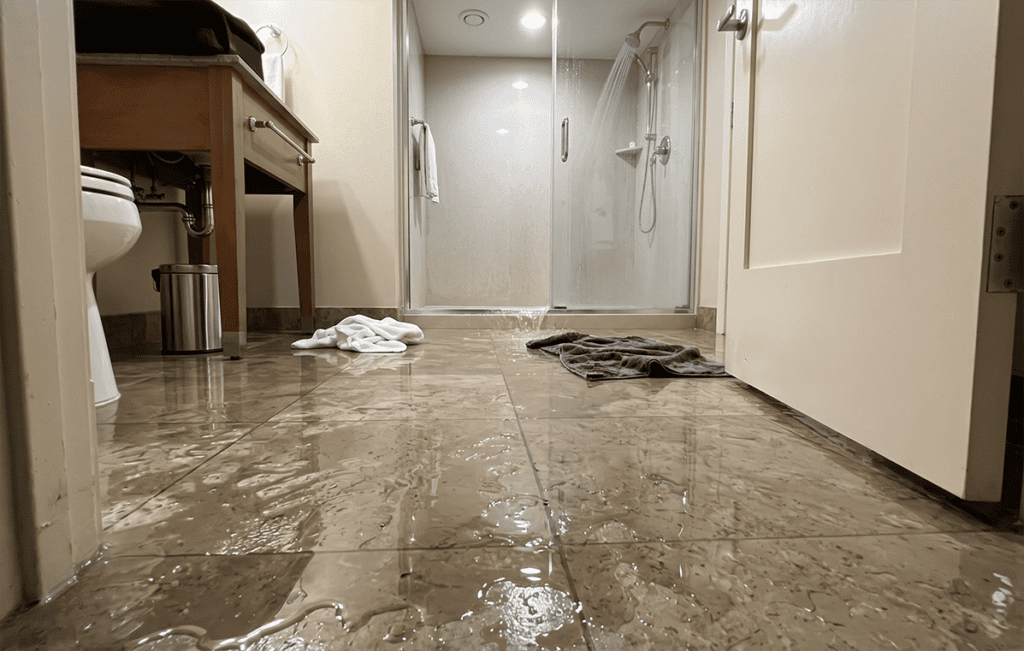
- Dangerous conditions in hotel rooms or bathrooms
- Inadequate security in certain circumstances
- Other hazards that create an unreasonable risk of injury
Texas law does not automatically hold a property owner responsible whenever someone is injured on the property. The circumstances matter.
For example, Texas courts generally recognize that a property owner may owe an invitee a duty to exercise reasonable care to protect against dangerous conditions that create an unreasonable risk of harm when the owner knew, or reasonably should have known, about the danger.
When Can a Property Owner Be Held Responsible?
A premises-liability case generally comes down to several important questions.
Was There a Dangerous Condition?
There must be a condition on the property that created an unreasonable risk of harm.
That could be something obvious, such as a large hole in a walkway, or something less noticeable, such as water accumulating on a floor because of a maintenance problem.
Did the Property Owner Know or Should They Have Known?
Knowledge can be an important part of a premises-liability claim.
Texas law recognizes both actual knowledge and constructive knowledge. Constructive knowledge can involve circumstances showing that a dangerous condition existed long enough that the property owner or occupier should have discovered it through reasonable inspection.
This is one reason evidence can be so important after an accident.
Maintenance records, inspection reports, photographs, surveillance footage, employee statements, incident reports, repair requests, and other documentation may help establish what happened and what the property owner knew.
Could the Danger Have Been Prevented or Addressed?
Property owners and businesses may have different ways to address a dangerous condition.
Depending on the circumstances, reasonable care could involve:
- Repairing the problem
- Removing the hazard
- Restricting access to the area
- Providing an adequate warning
- Inspecting the property regularly
- Correcting known maintenance problems
- Taking reasonable safety measures
Texas courts have explained that, in many circumstances, a landowner’s duty may be satisfied by making a dangerous condition safe or providing an adequate warning, although there are important exceptions.
Bathrooms and Other Areas Should Not Be Overlooked
Some of the most serious premises-liability accidents can happen in places people assume are safe.
Bathrooms, for example, can present significant risks. Water leaks, slippery surfaces, inadequate grab bars, damaged flooring, poor lighting, and other problems can create dangerous conditions.
For someone with mobility limitations, an unsafe bathroom can present an even greater risk.
That is why requests for reasonable safety measures should not simply be ignored. A condition that might present a manageable risk to one person could pose a much greater danger to another.
When a serious injury occurs, it may be important to determine whether the condition could have been identified and corrected before the accident.
What If an Injury Becomes More Serious Over Time?
Not every injury ends with the initial accident.
A fall can result in a serious fracture. A fracture may require surgery. Surgery can lead to a long recovery and additional medical complications. In some situations, an injured person’s overall health can decline significantly after a serious injury.
That does not automatically mean a property owner is legally responsible for every later medical complication or death. Those questions can be complex and require careful evaluation of the medical evidence and the connection between the original injury and later events.
But it does mean that a seemingly simple fall should never be dismissed as “just a fall.”
The consequences can be life-changing.
What Should You Do After a Premises Injury?
If you are injured on someone else’s property, try to document what happened as soon as you safely can.
Consider:
- Take photographs of the condition that caused your injury.
- Report the incident to the property owner or manager.
- Ask for a copy of any incident report.
- Get medical attention for your injuries.
- Keep records of medical treatment and expenses.
- Save photographs, videos, receipts, messages, and other evidence.
- Write down what you remember about the accident while it is still fresh.
- Speak with a personal injury attorney if you believe a dangerous property condition contributed to your injury.
If there may be surveillance video, maintenance records, inspection records, or other evidence, acting quickly can also be important.
How Can Carabin Law Help?
At Carabin Law, we understand that an injury can affect far more than the moment when an accident occurs.
A serious fall can mean surgery, missed work, mounting medical expenses, a long recovery, and major changes to a person’s daily life.
Our attorneys can investigate the circumstances surrounding an injury and work to determine what happened, whether a dangerous condition existed, whether the property owner or occupier knew or should have known about it, and whether reasonable steps could have prevented the accident.
Every case is different, and premises-liability claims can involve complicated questions about property ownership, control, notice, maintenance, causation, and liability.
If you or someone you love was seriously injured because of a dangerous condition on someone else’s property, Carabin Law is here to help you understand your options.
Every Case Matters. Every Client Counts.
This blog is for general informational purposes only and is not intended to provide legal advice. Every case is different, and the information in this article does not create an attorney-client relationship.