A current client recently contacted our office after receiving documents that appeared to come from a federal court and asked us a simple but important question: “Are these real?”
The paperwork looked official, complete with court seals, case numbers, and the name of a real courthouse. But documents like these are increasingly being used in jury duty scams targeting residents across Texas. These scams often threaten arrest warrants or legal consequences and pressure recipients to make immediate payments for supposed “court fees.”
At Carabin Law, we want the public to understand the warning signs and how legitimate jury summons actually work, so you can recognize a scam and protect yourself.
What the Jury Duty Scam Looks Like
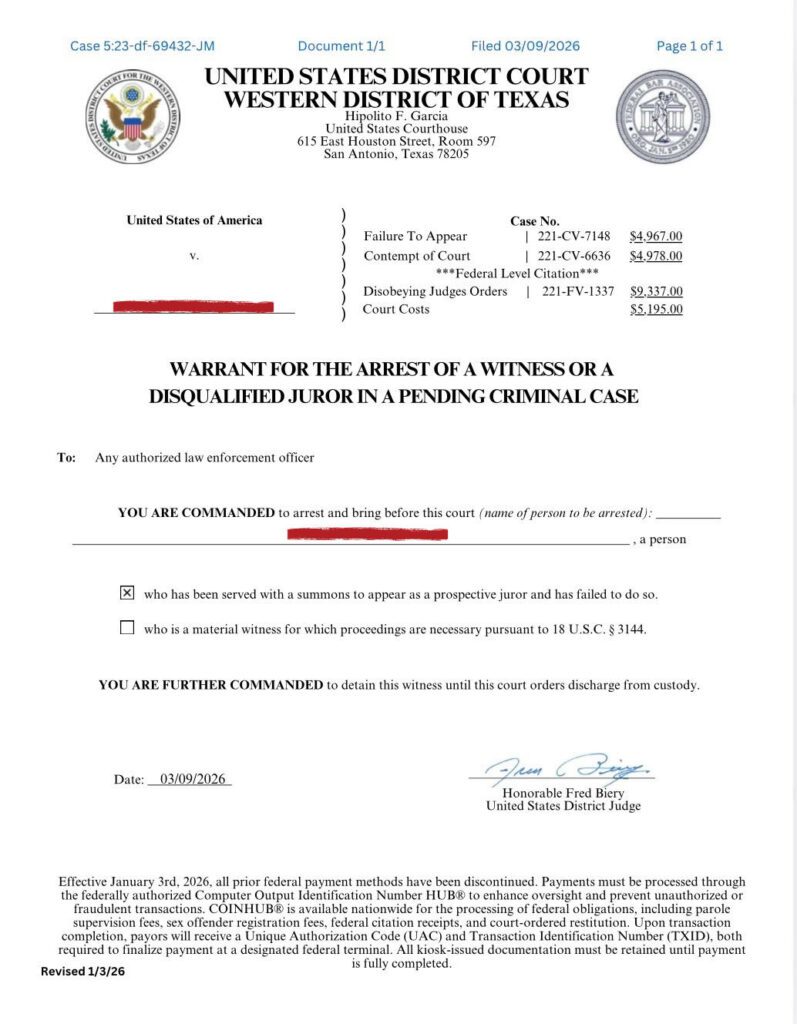
Scammers are sending letters, emails, or text messages claiming that:
- You missed a jury summons
- A warrant has been issued for your arrest
- You must pay fines or court costs immediately
- Payment must be made through digital transfer, prepaid cards, or special payment portals
Some notices even include:
- Federal court headers
- Fake case numbers
- Judge signatures
- Threats of arrest for “failure to appear”
These tactics are meant to create panic and urgency, pushing people to pay without verifying the claim.
Important: Courts Do NOT Collect Jury Fines This Way
Federal and state courts do not demand payment over the phone, by email, or through third-party payment systems for missed jury duty.
Legitimate courts will:
- Send official correspondence through verified mail
- Provide instructions to contact the court directly
- Allow you to resolve issues through court clerks or official channels
If anyone asks for immediate payment to avoid arrest, it is almost certainly a scam.
Jury Duty Facts Everyone Should Know
Understanding how jury service actually works can help you recognize when something isn’t right.
What happens if you miss jury duty?
Missing jury duty does not automatically lead to an arrest warrant.
Most courts will simply:
- Send another notice
- Allow you to reschedule
- Ask you to contact the court clerk
In rare cases, the court may request an explanation, but immediate arrest threats are extremely unusual.
Can you be fined for missing jury duty?
Some courts technically have the authority to issue fines for repeated failure to appear. However:
- Fines are handled through the court system
- You will receive official communication
You are not asked to pay immediately through outside payment methods
Will the court call you and demand payment?
No.
Courts do not call people demanding payment to avoid arrest for jury duty.
Phone calls claiming to be from:
- law enforcement
- federal courts
- court clerks
are a common tactic used by scammers.
How do real jury summons arrive?
Legitimate jury summons typically arrive through:
- Official mail
- From the county or federal court
- With instructions to verify online through a court website
They do not include payment demands.
Red Flags of a Jury Duty Scam
Watch for these warning signs:
- Threats of immediate arrest
- Demands for urgent payment
- Requests for gift cards, wire transfers, or payment apps
- Emails or texts claiming to be from the court
- Documents asking for personal or financial information
If something feels rushed or threatening, pause and verify the source.
What To Do If You Receive a Suspicious Jury Notice
If you believe you’ve received a fraudulent jury summons:
- Do not send money.
- Do not click links or scan QR codes.
- Contact your local court clerk directly using the official website.
- Report the scam to the FTC or local law enforcement.
Protecting Yourself from Legal Scams
Scammers often use legal threats to create fear and urgency. Knowing your rights, and how courts actually operate, can help you avoid becoming a victim.
If you’re unsure whether a notice is legitimate, take the time to verify it through official court channels before taking action.